Nov 17, 2026 · Stretch Film Guides
Pre-Stretched Film vs. Standard LLDPE Wrap: Reducing Film Usage
What Pre-Stretched Film Actually Is
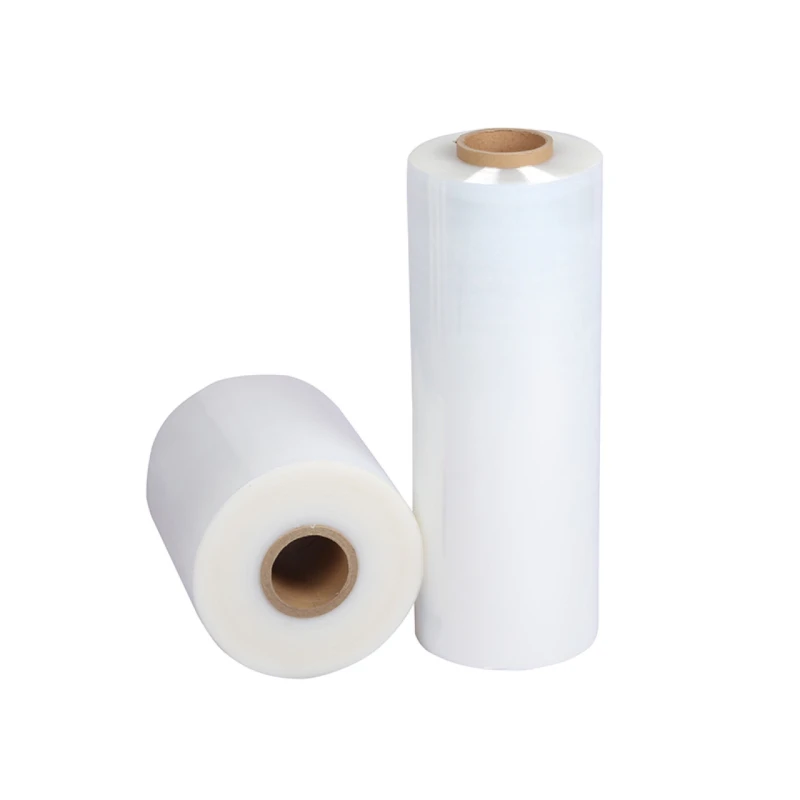
Conventional LLDPE stretch film arrives on the roll unstretched; the warehouse operator or wrapping machine must apply force to elongate the web during wrapping. Pre-stretched film reverses that sequence. During converting, the manufacturer draws standard cast LLDPE close to its optimal elastic yield point and winds it onto lightweight cores with reinforced or folded edges.
Because the polymer has already been oriented lengthwise in the factory, pre-stretched hand rolls typically measure just 8 um to 12 um in thickness—roughly half the nominal gauge of conventional 17 um to 23 um hand wrap—yet maintain high tensile strength along the wrap direction.
Performance Comparison: Pre-Stretched vs. Standard Hand Wrap
Understanding how pre-stretched film behaves differently in the operator's hands clarifies why many high-volume manual warehouses switch away from thick conventional rolls.
| Attribute | Pre-Stretched Film (8–12 um) | Conventional Hand LLDPE (17–23 um) |
|---|---|---|
| Nominal Film Thickness | 8 um to 12 um | 17 um to 23 um |
| Pull Force Required | Minimal; apply gently with slight tension | High; operator must pull hard to activate stretch |
| Neck-Down Behavior | Minimal width loss during wrapping | Narrows significantly if pulled aggressively |
| Edge Strength | Folded/hemmed edges resist edge nicking | Unfolded slit edges tear if dropped or nicked |
| Roll Weight (Typical) | 1.2 kg to 2.5 kg for long 450–600 m rolls | 2.5 kg to 4.5 kg for shorter 250–300 m rolls |
| Post-Wrap Shrink Memory | Contracts slightly after release to lock load | Depends heavily on how hard operator pulled |
Operational Benefits on the Warehouse Floor
Lower Operator Fatigue and Faster Wrapping
Wrapping pallets with conventional 20 um hand stretch film requires walking backward while pulling hard enough to elongate the web. Over an eight-hour shift, operators naturally ease up on tension, leaving inconsistent wraps. With pre-stretched film, the operator simply guides the roll around the pallet with light, steady tension. Because the roll weighs less and requires almost no physical stretching, wrapping speed increases and shoulder or wrist strain drops noticeably.
Consistent Load Stability Without Over-Pulling
Pre-stretched film acts like a taut rubber band waiting to recover slightly after application. Once laid onto the pallet, it retains firm, even holding force across corners and flat carton faces alike. Furthermore, because the web maintains nearly 100% of its original width (minimal neck-down), every pass covers full vertical height—eliminating the gaps and extra overlap passes common when conventional film necks down from 500 mm to 350 mm under heavy manual pulling.
Reduced Film Weight per Wrapped Pallet
For buyers targeting packaging waste reduction or lower plastic weight per shipped unit, pre-stretched wrap cuts resin consumption per pallet substantially. Longer roll lengths on lighter cores also reduce core waste, pallet-space consumption in stockrooms, and roll changeover frequency.
Limitations: Where Standard Heavy-Gauge Wrap Still Wins
Pre-stretched film is not a universal replacement for every application. Buyers should keep conventional heavy-gauge wrap or machine stretch film in stock for three specific cases:
- Very Heavy or Sharp-Edged Loads: Cast pre-stretched 8–10 um film has lower puncture resistance than 25–30 um conventional cast or blown film when wrapping rough lumber, steel profiles, or strapped heavy machinery.
- Power Pre-Stretch Wrappers: Automated carriages with 200–250% pre-stretch rollers are designed for unstretched machine film; running pre-stretched film through active pre-stretch rollers will snap the web immediately.
- Extreme Load Compression Needs: If a pallet requires aggressive inward crushing tension to lock loose items, thick blown wrap or heavy machine gauge remains stronger.
Buyer Specification Tips for Pre-Stretched Rolls
When comparing pre-stretched film samples from packaging film manufacturers, evaluate physical construction and converting precision rather than micron thickness alone:
- Inspect Edge Folding: True folded (hemmed) edges dramatically reduce breaks if a roll is accidentally dropped on concrete or rubbed against rough wooden pallet deck boards.
- Verify Net Length and Width: Confirm usable roll width (commonly 380 mm to 450 mm) and exact meter length per roll (typically 450 m to 600 m), as wider effective coverage reduces total revolutions per pallet.
- Check Core Weight vs. Film Weight: Lightweight thin-wall cores keep total hand-held roll mass low without sacrificing structural stiffness on manual dispensers.
- Test Cling at Tail Seal: Thin pre-stretched webs need reliable one-side cling so the final tail stays sealed cleanly against the outer layer without tape or adhesive flagging in transit.
- Run a Pallet Drop or Tilt Trial: Measure carton shift after wrapping two top and two bottom layers to confirm 8–10 um or 10–12 um grades match your load density.
Want to test 9 um or 12 um pre-stretched hand rolls alongside conventional LLDPE specs? Share your pallet types and current roll usage on our contact page to request matching sample dimensions.
Looking for a supplier?
Send us your requirements and we will reply with a quotation.