Nov 23, 2026 · Shrink Film & Sourcing Guides
How to Specify Stretch & Shrink Film When Sourcing from China
Why Clear Technical Specs Prevent Sourcing Disputes
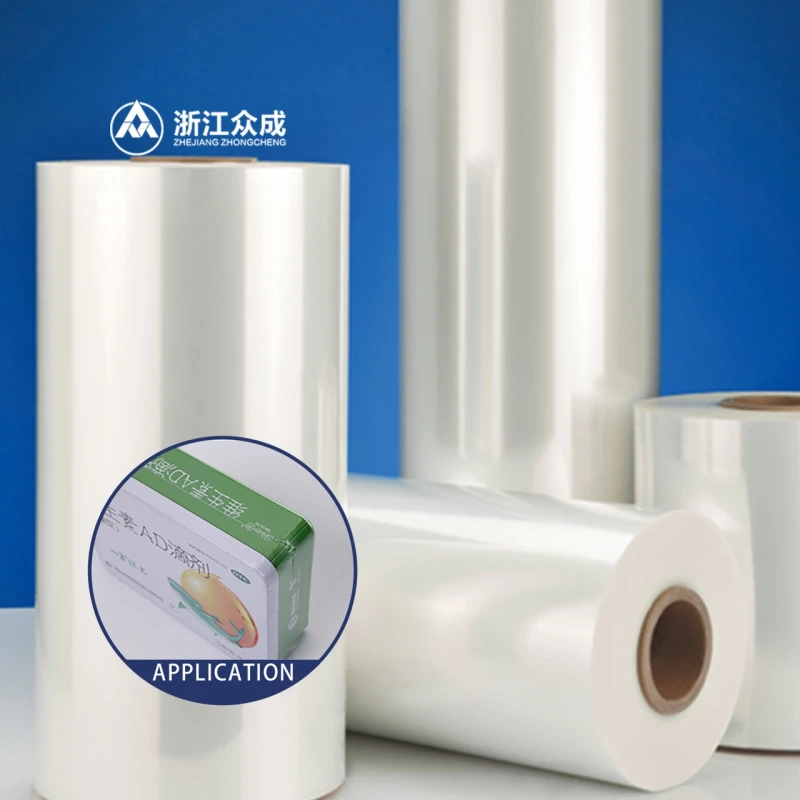
Two stretch or shrink film quotes from different factories can look similar on paper while delivering very different performance on a customer's wrapping line. In export packaging, misunderstandings rarely come from polymer names alone—they stem from ambiguous weight definitions, loose gauge tolerances, or untested roll dimensions. Writing a precise Request for Quotation (RFQ) eliminates guesswork and ensures every supplier quotes on an identical technical baseline.
1. Separate Net Film Weight from Paper Core Weight
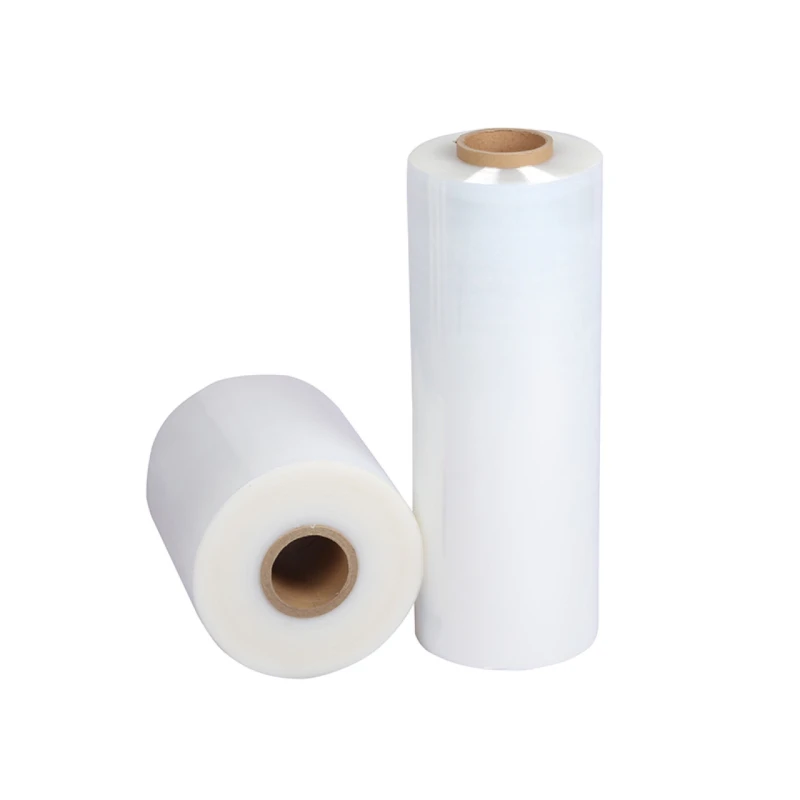
Never request "2 kg hand rolls" without clarifying whether 2 kg refers to the net LLDPE film or the gross roll weight including the cardboard tube. In high-volume distribution, an extra 300 grams per paper core alters the true usable length of every roll by 15% or more.
- Specify net film weight (kg) separately from core weight (g).
- State core inner diameter (ID): Standard cores are 76 mm (3 inches) for most machine and hand rolls, though 38 mm or 50 mm cores are used on specialized dispensers.
- Confirm core wall strength: Machine pre-stretch rolls under high carriage tension require thicker spiral-wound cores so the tube does not crush on the turntable spindle.
2. Define Micron Thickness and Tolerance
Film thickness directly governs linear length per kilogram. A nominal 20-micron hand stretch film roll that averages 18 microns delivers more meters per roll but sacrifices puncture strength; one averaging 22 microns runs thicker and shortens yield. Always ask suppliers for their extrusion gauge tolerance—typically ±5% to ±8% across the web—and specify whether gauge is measured by micrometer or gravimetric yield calculation.
3. Specify Mechanical Performance & Pre-Stretch Capability
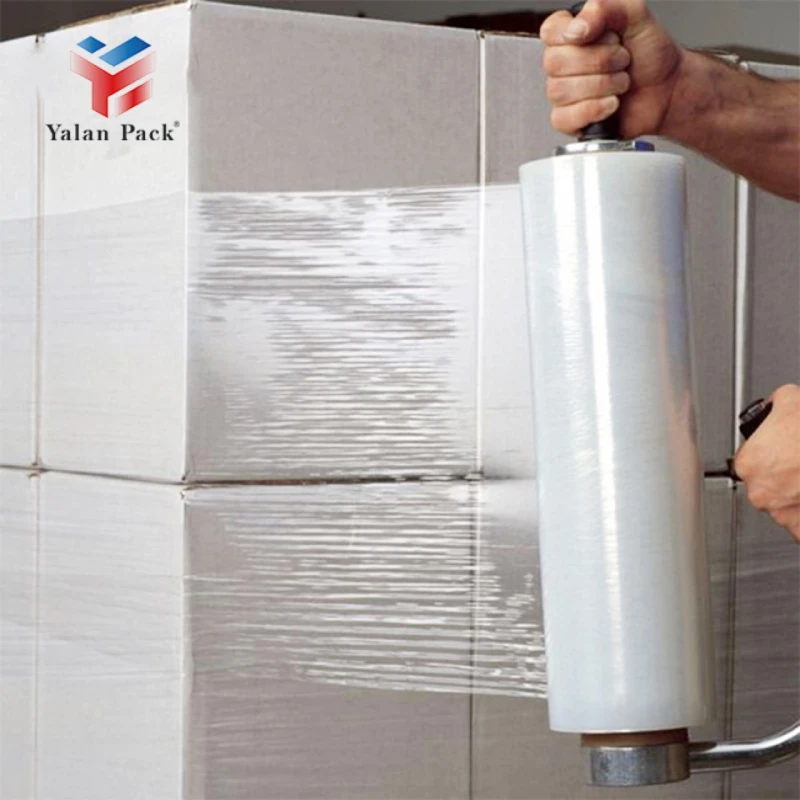
For machine stretch film, thickness alone does not predict pallet stability. A high-performance 15-micron cast film formulated with metallocene LLDPE often outperforms a basic 23-micron commodity film. Include these mechanical parameters in your RFQ:
- Pre-stretch ratio target: e.g., 150%, 200%, 250%, or 300% depending on the end user's wrapper carriage gear ratio.
- Cling type: One-side cling (inside or outside) prevents adjacent wrapped pallets from sticking together during warehouse staging, whereas two-side cling suits light manual wrapping.
- Optical finish: Clear transparent, tinted, or opaque black/white UV-shielded film for security and outdoor storage.
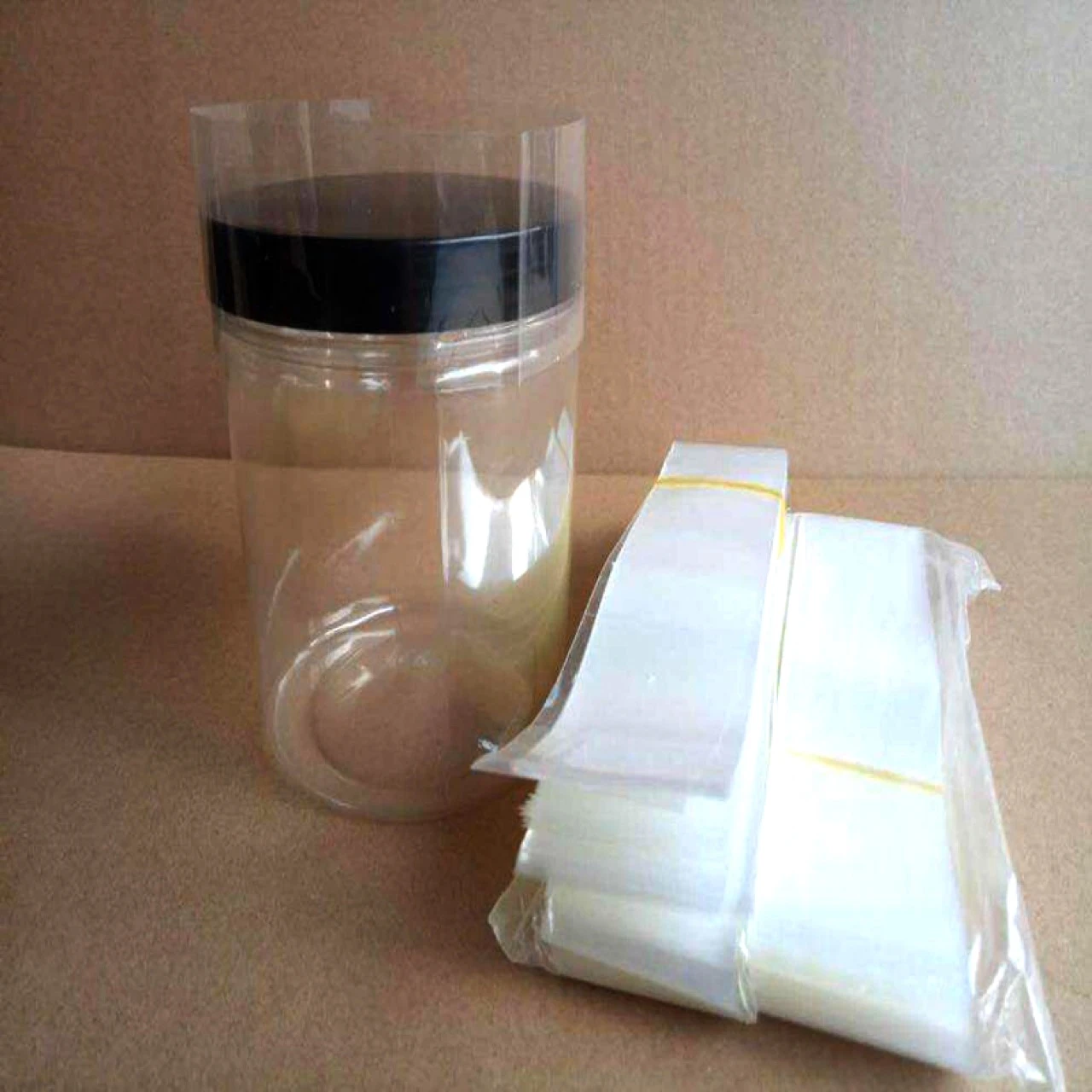
If your RFQ also covers POF shrink film or PVC/PETG shrink sleeves, specify roll configuration (centerfold vs. single-wound vs. layflat tubing), perforation requirements (micro-perforated or non-perforated), and target TD/MD shrink percentages.
4. Verify Elongation, Puncture Resistance, and Roll Winding Quality
Beyond basic film thickness, buyers should confirm elongation at break (commonly 300% to 500% in machine direction for cast stretch grades) and dart-drop or Elmendorf tear performance, especially when wrapping sharp timber, bagged resins, or irregular corrugated corners. Equally important is winding quality: telescoping edges, air pockets, or uneven roll tension cause immediate web breaks on powered pre-stretch carriages. Ask for batch traceability labels on every carton and pallet so downstream distributors can verify lot consistency across repeat shipments.
5. Complete B2B Film RFQ Checklist
| Parameter | What to Specify in Your RFQ | Why It Matters |
|---|---|---|
| Product Type & Process | Cast LLDPE, blown stretch, standard/cross-linked POF, PVC, or PETG | Matches extrusion resin to line tension and tunnel heat |
| Roll Width & Length | Exact width (mm) and linear meters (or net kg) | Ensures fit on wrapper carriages and L-sealer jaws |
| Thickness | Microns or gauge + acceptable tolerance range | Controls puncture resistance and roll yield |
| Core Spec | Inner diameter (mm), core weight (g), flush vs. extended core | Prevents spindle slippage and freight waste |
| Packing Format | Rolls per carton, plain vs. printed boxes, palletized vs. loose | Protects roll edges and optimizes container loading |
| Destination Port | Port name + pallet size preference (e.g., 1.1×1.1 m or Euro) | Allows accurate payload and axle-weight planning |
6. Run Practical Sample Testing Before Mass Production
Before confirming a full container, test sample rolls under real operating conditions rather than relying solely on bench numbers. Measure actual roll width, core ID, and net film weight on a calibrated scale upon arrival. On a stretch wrapper, run a full pallet at the customer's target pre-stretch setting and inspect corner edges for neck-down, tearing, or loss of holding force after 24 hours. On a shrink line, pass five consecutive packs through the heat tunnel to verify seam strength and corner finish.
Ready to build a clear specification sheet for your next import order? Contact Sharpen Film with your target roll sizes, equipment type, and destination port to request test samples and a container loading breakdown.
Looking for a supplier?
Send us your requirements and we will reply with a quotation.