Nov 20, 2026 · Shrink Film & Sourcing Guides
Cross-Linked vs. Standard POF Shrink Film for High-Speed Packaging Lines
What Makes Cross-Linked POF Different?
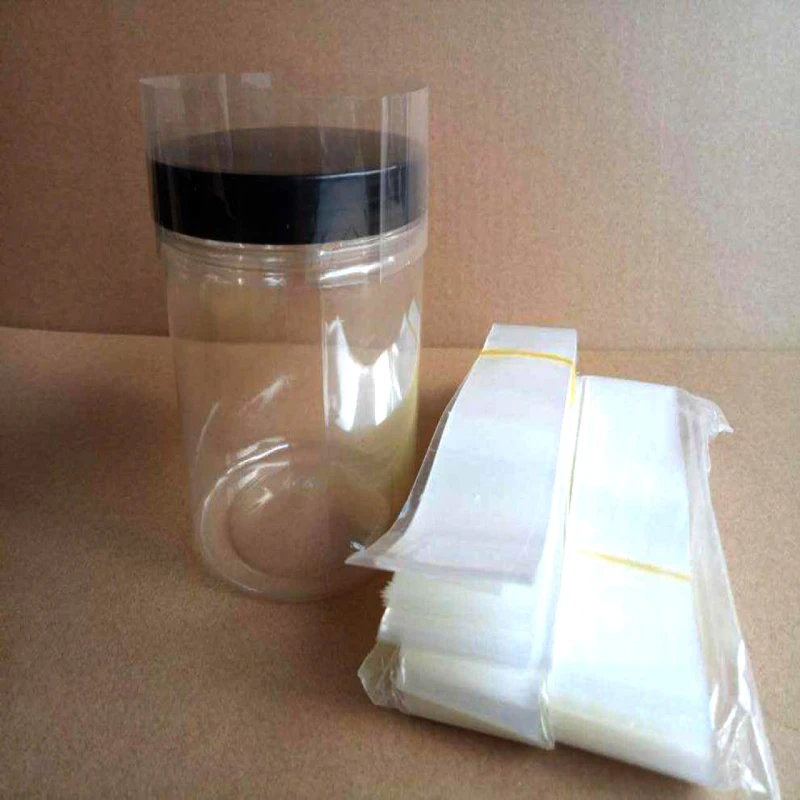
On paper, standard polyolefin (POF) and cross-linked POF look almost identical: both are clear, glossy, five-layer co-extruded films used across retail and industrial overwrapping. The difference happens during manufacturing. Cross-linked POF passes through an electron-beam irradiation stage after extrusion, creating covalent carbon-to-carbon bonds across polymer chains. That molecular network fundamentally changes how the film responds to heat, tension, and sealing blades.
For packaging converters and high-output plants, choosing between standard and cross-linked grades in our POF shrink film range comes down to line speed, product shape, and sealing consistency.
Seal Strength and Burn-Through Resistance
Standard POF melts cleanly at typical sealing temperatures, but it has a relatively narrow thermal operating window. When a high-speed continuous side-sealer fluctuates by 10°C to 15°C—or when a tunnel runs hotter to keep up with 40 to 80 packs per minute—standard POF can suffer pinholes, thin "angel hair" strings, or seam blowouts under shrink tension.
Cross-linked POF solves this through higher melt strength. Even when heated past its softening point, the irradiated polymer network resists thinning and tearing. Key practical advantages on the production floor include:
- Stronger lap and fin seals: Seals hold firm during aggressive shrink recovery, even around heavy or awkwardly shaped products.
- Reduced burn-through in the tunnel: If an operator pauses a conveyor briefly or if airflow hits an exposed corner, cross-linked film is far less likely to split open.
- Cleaner side-sealer performance: Less melted polymer builds up on rotary sealing wheels or hot knives, extending intervals between maintenance stops.
- Downgauging potential: Because cross-linked film exhibits higher tear and tensile strength, many plants drop from 19 microns standard POF to 15 microns cross-linked POF—or from 15 microns to 12 microns—without losing pack integrity.
Technical Comparison: Standard vs. Cross-Linked POF
| Performance Metric | Standard POF | Cross-Linked POF |
|---|---|---|
| Manufacturing Process | Multi-layer co-extrusion | Co-extrusion + electron-beam cross-linking |
| Sealing Temperature Window | Moderate (requires stable blade temp) | Wide (tolerant of speed and heat swings) |
| Burn-Through Resistance | Standard; sensitive to tunnel hotspots | High; resists blowouts on sharp corners |
| Seal Strength Under Tension | Good for light to medium packs | High; suitable for heavy or irregular items |
| Dog-Ear & Corner Finish | Clean on regular rectangular boxes | Tighter, smoother shrink on contoured shapes |
| Common Line Speeds | Manual to medium-speed L-sealers (10–35 ppm) | High-speed side-sealers & flow wrappers (35–100+ ppm) |
Centerfold vs. Single-Wound Rolls
Selecting the right roll winding format is just as important as choosing the resin grade. Both standard and cross-linked POF are supplied in two main configurations:
Centerfold (CF) Film
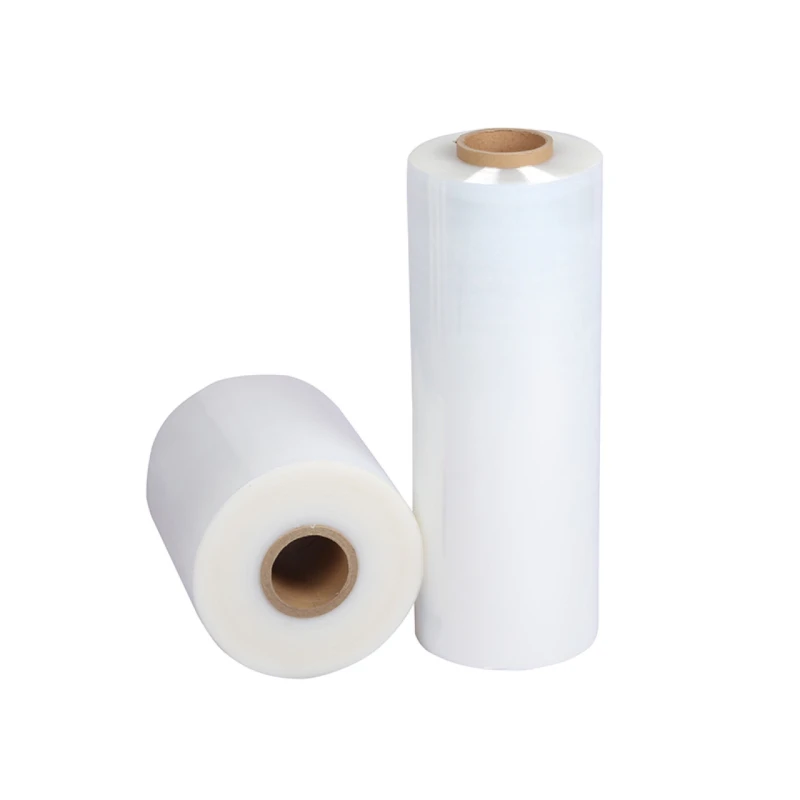
Centerfold film is folded lengthwise down the middle during slitting, creating two layers wound onto a single roll. It runs on L-bar sealers and intermittent side-sealers where the product is inserted between the upper and lower webs. Standard centerfold rolls save floor space and simplify threading on manual or semi-automatic machines, though total roll length is half that of single-wound film at the same outer diameter.
Single-Wound (SW) Film
Single-wound film is a flat single layer of film wound onto the core. It is used primarily on high-speed horizontal flow wrappers, form-fill-seal equipment, and automated lap-sealing machines that form a tube around the product with an electrostatic or fin seal. Single-wound rolls double the linear footage per roll change, minimizing operator stops on continuous shifts.
Perforation and Air Escape on Fast Tunnels
At speeds above 35 packs per minute, trapped air inside the sealed pouch has only seconds to escape before the shrink tunnel closes the film around the product. Without proper venting, packages exit the tunnel looking like inflated pillows—often called "ballooning"—or blow open along the cross seal.
- Hot-pin or mechanical micro-perforation: Factory-perforated POF rolls feature uniform rows of tiny pinholes that let heated air vent immediately without spoiling optical gloss. Cross-linked POF tolerates micro-perforation particularly well because its irradiated polymer matrix resists tearing outward from each pinhole under high shrink tension.
- Line-mounted perforator wheels: For plants running both perforated and airtight wraps, adjustable pin wheels mounted before the forming shoulder offer flexibility, though blunt pins can create jagged nicks in standard POF.
Matching Film Grade to Your Line
Do not over-specify cross-linked POF for every account. For steady, low-to-medium speed L-bar wrapping of uniform cartons, books, or light retail boxes, standard 15-micron or 19-micron POF delivers crisp appearance without unnecessary material expense. Reserve cross-linked POF for high-speed continuous side-sealers, multi-pack hardware, sharp-edged trays, or lines experiencing frequent seam splits and film breaks.
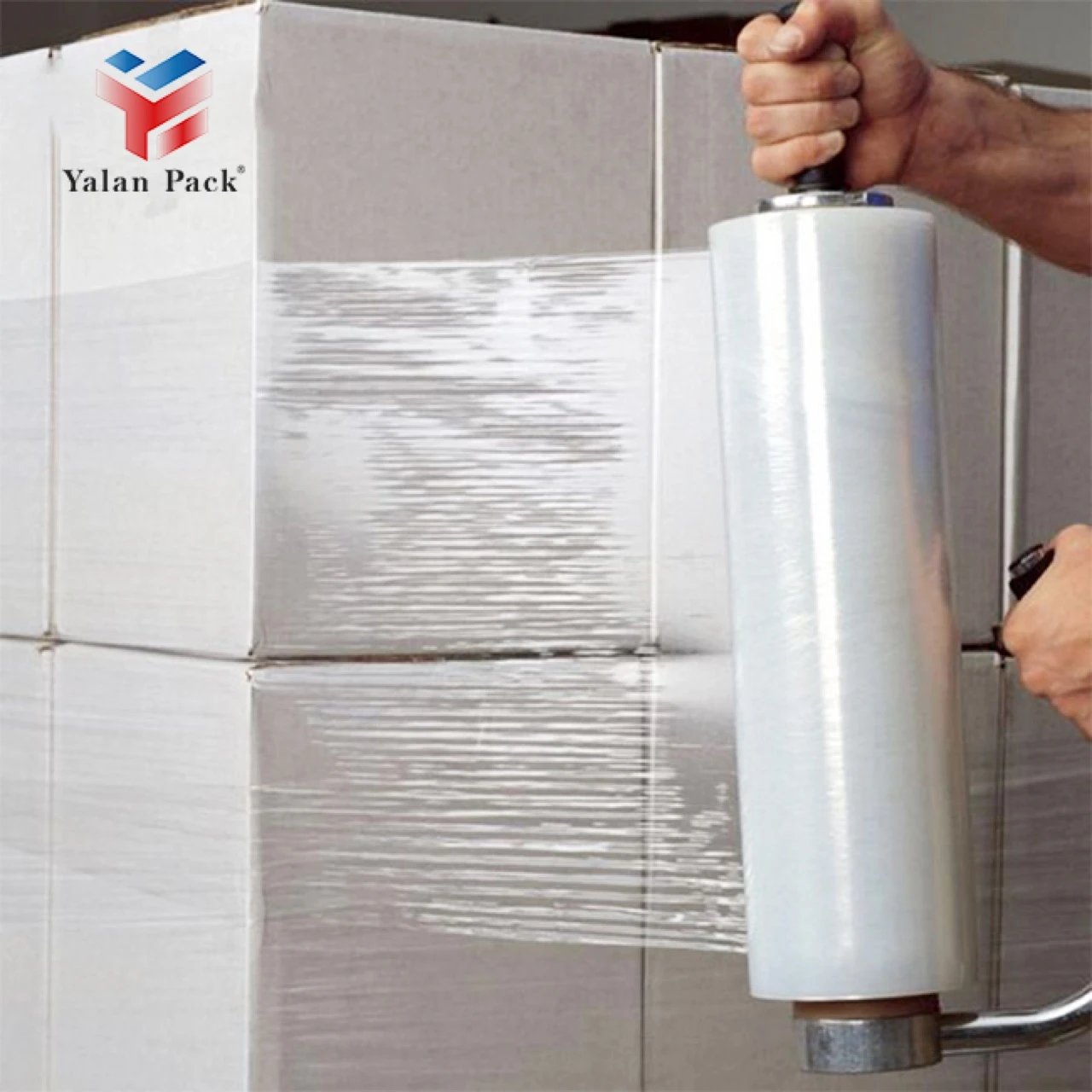
For palletized export orders combining standard and cross-linked SKUs, distributors often pair shrink film shipments with machine stretch film for end-of-line pallet stabilization. Need help matching gauge, perforation pattern, or CF/SW winding to a customer's machine? Reach out to our team with the wrapper model and package dimensions.
Looking for a supplier?
Send us your requirements and we will reply with a quotation.